
5 WORST Exercises for L4 L5 Disc Bulge. Dangerous! Do These Instead
If you have an L4-L5 or L5-S1 disc bulge, staying active and getting stronger is part of recovery. But some of the most common core and gym exercises can quietly make your back pain, sciatica, and leg symptoms worse. In our office, these are the five exercises we most often ask disc bulge patients to stop doing, especially during the early stages of recovery.
The good news is that every exercise on this list has a safer replacement that builds the same strength without loading the injured disc the same way. This article walks through all five, explains why each one is a problem, and shows you what to do instead.
Quick Answer: What exercises should you avoid with an L4-L5 disc bulge?
Avoid sit-ups, barbell deadlifts, loaded squats, the seated hamstring stretch, and oblique side bends. Each one repeatedly loads the disc in a position that increases pressure on it: bending the lower back forward, bending sideways, or lifting heavy weight straight through the spine. Replace them with prone planks, glute bridges, wall sits, the wall hamstring stretch, and side planks, which build strength while keeping the spine in a more neutral, supported position.
If disc bulge pain or sciatica is limiting your exercise and you want to understand what is driving it, you can request an appointment here.
The One Principle Behind All Five Exercises
Before the list, one simple principle explains all of it. Most L4-L5 and L5-S1 disc bulges become more irritated when you repeatedly load the disc in positions that increase pressure on it. That usually means exercises that involve bending your lower back forward, bending sideways, or lifting heavy weight through your spine. Those movements place extra stress on an already irritated disc and can make back pain and leg sciatica worse. The smarter approach is to focus on movements that keep the spine in a more neutral position while strengthening the muscles that support the lower back. Keep that principle in mind and the five exercises below will make sense right away.
Worst Exercise #1: Sit-Ups
Sit-ups are probably the most common exercise we tell patients with an L4-L5 or L5-S1 disc bulge to stop doing. Every time you perform a sit-up, your lower back repeatedly bends forward into lumbar flexion. That forward bending significantly increases pressure on the discs in the lower back, especially at the L4-L5 and L5-S1 levels, where disc bulges occur most often. If that disc is already bulging and irritating a nearby nerve, repeatedly loading it in this position can increase inflammation and make symptoms worse, including more low back pain and more leg pain, numbness, or tingling.
Do this instead: the prone plank. A prone plank trains your core to brace and stabilize while your spine stays in a neutral position. Here is how to do it. Get down on your forearms with your elbows right under your shoulders. Come up onto your forearms and toes with your body in one straight line. Tuck your pelvis slightly and brace your core like someone is about to tap you in the stomach. Hold for 20 to 30 seconds, rest, and repeat for 3 sets. You should feel your deep core and glutes working, without your lower back sagging.
Worst Exercise #2: Barbell Deadlifts
Deadlifts build serious strength, but with a bulging disc the heavy load is brutally unforgiving. The weight drives straight through the spine, and the moment fatigue sets in and your lower back starts to round, that force can push the disc further back toward the nerve. It surprises a lot of people, because deadlifts have a reputation as a foundational strength exercise. For an irritated disc in the early stages of recovery, though, the risk is not worth it.
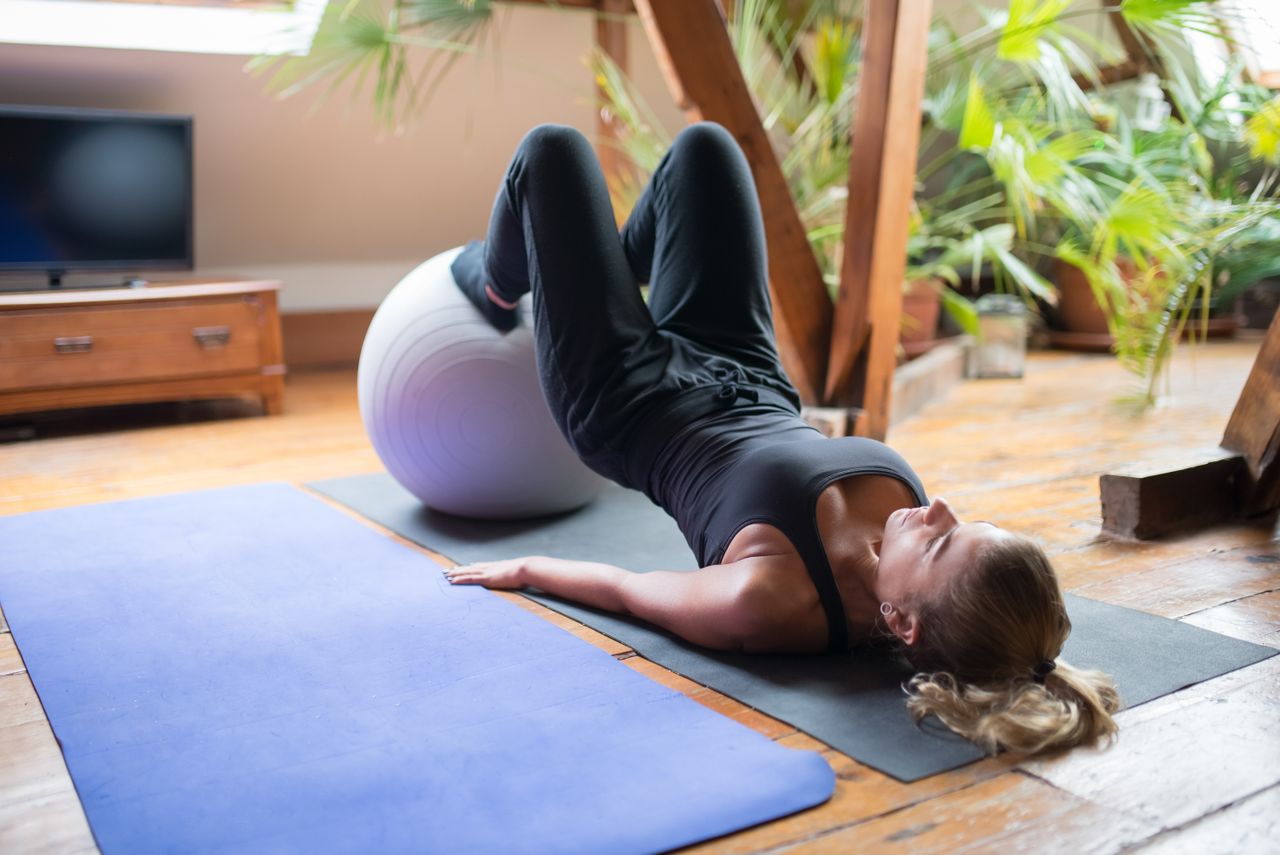
Do this instead: glute bridges. Glute bridges give you the hip and glute strength deadlifts are known for, without the spinal compression. Lie on your back with your knees bent and your heels down. Keep your ribs down, squeeze your glutes to lift your hips, hold for 3 seconds at the top, then lower slowly. Your glutes and hamstrings do the work while your spine stays supported on the floor.
Worst Exercise #3: Loaded Squats
Loaded squats seem like a smart leg exercise, but the weight sits on your shoulders and compresses straight down through your spine. As the weight gets heavier or you get tired, it becomes very hard to keep a neutral spine, especially at the bottom of the squat. That combination of heavy compression and losing your position is a bad setup for an irritated L4-L5 or L5-S1 disc.
Do this instead: wall sits. If you want stronger quads and glutes without loading your spine, wall sits are a great replacement for loaded squats. Your back stays flat and supported against the wall in a neutral position while your legs do all the work, so you build strength without heavy weight pushing down through your disc.
Worst Exercise #4: The Seated Hamstring Stretch
The seated hamstring stretch looks harmless, but reaching for your toes rounds your lower back forward for a long hold. That sustained bend pushes the disc backward. And because the sciatic nerve runs through the back of the leg, the stretch can also pull on an already irritated nerve and flare your leg pain, numbness, or tingling.
Do this instead: the wall hamstring stretch. Instead of rounding your back to stretch your hamstrings, lie on your back and let the wall do the work. One heel rests on the wall with your knee slightly bent while the other leg stays flat on the floor, so your spine stays neutral and supported the whole time. Hold 20 to 30 seconds per side. You should feel a gentle stretch in the back of your thigh, never a sharp pull behind the knee or pain shooting down your leg.
Worst Exercise #5: Oblique Side Bends
Side bends with a dumbbell feel like a great oblique workout, but bending sideways under load compresses one side of the disc and squeezes the nerve openings on that side. If your bulge already irritates a nerve, that can make your back and leg pain worse.
Do this instead: side planks. Side planks train the same side core muscles to resist bending instead of producing it. That protects your spine while you get stronger, and it fits the principle from the start of this article: build strength while keeping the spine in a more neutral, supported position.
Safety and When to Stop
Only do what feels comfortable and never push through pain. Stop any exercise that produces sharp, shooting, or intense leg pain, increases numbness or tingling, or leaves you noticeably worse afterward. Make the movement smaller, choose the gentler replacement, or stop for that day. These guidelines are general education, not a prescription for your specific case, and tolerance varies from person to person during disc recovery.
When to Seek Professional Help
If your back pain or sciatica keeps returning, if pain is worsening, or if you develop new or progressive weakness, numbness, or changes in bladder or bowel function, get evaluated promptly. Groin or saddle numbness with bladder or bowel changes needs emergency care. Please check with your own chiropractor, doctor, or spine specialist to determine what is driving your symptoms and what exercise is appropriate for your case.
Final Thoughts
The exercises to avoid with an L4-L5 disc bulge all break the same rule: they repeatedly load the disc while it is bent forward, bent sideways, or compressed under heavy weight. Sit-ups, barbell deadlifts, loaded squats, the seated hamstring stretch, and oblique side bends are the five we see cause the most trouble. You do not have to stop training, though. Prone planks, glute bridges, wall sits, the wall hamstring stretch, and side planks build the same strength and flexibility while keeping your spine neutral and supported, which is exactly what an irritated disc needs while it heals.
Frequently Asked Questions
Why are sit-ups bad for a disc bulge?
Every sit-up rep forces your lower back to round forward under load. That repeated forward bending increases pressure on the L4-L5 and L5-S1 discs and pushes the disc backward, toward the nerves. A prone plank trains the same core muscles while the spine stays neutral, which is why it is the safer replacement.
Can I ever deadlift again with a bulging disc?
That depends on your case and your stage of recovery. During the early stages, heavy barbell deadlifts are one of the riskiest choices because fatigue makes the lower back round under load. Glute bridges build hip and glute strength in the meantime. Whether and when loaded lifting fits your case is a decision to make with your own chiropractor, doctor, or spine specialist.
Are bodyweight squats okay, or only loaded squats a problem?
The problem described here is the loaded squat: weight on the shoulders compressing straight down through the spine, combined with how hard it is to hold a neutral position at the bottom as weight and fatigue increase. If you want to train your legs during recovery, wall sits strengthen the quads and glutes with your back supported against the wall and no weight through the disc.
Why does the seated hamstring stretch make my leg pain worse?
Reaching for your toes rounds your lower back forward for a long hold, which pushes the disc backward. The stretch also pulls on the sciatic nerve, which runs through the back of the leg, so it can flare leg pain, numbness, or tingling. The wall hamstring stretch keeps your spine flat and supported while you stretch.
What should a safe core exercise feel like?
You should feel the target muscles working, like your deep core and glutes during a plank, without sharp, shooting, or intense leg pain and without symptoms that linger afterward. Mild muscle effort is expected. Pain that shoots down the leg or stays with you after you stop is a sign to ease off or stop.
Where can I get help for a disc bulge in San Jose?
If you are in the San Jose area and dealing with an L4-L5 or L5-S1 disc bulge, Ativa Pain & Spine Center offers evaluations to help determine what is driving your symptoms. You can request an appointment here.